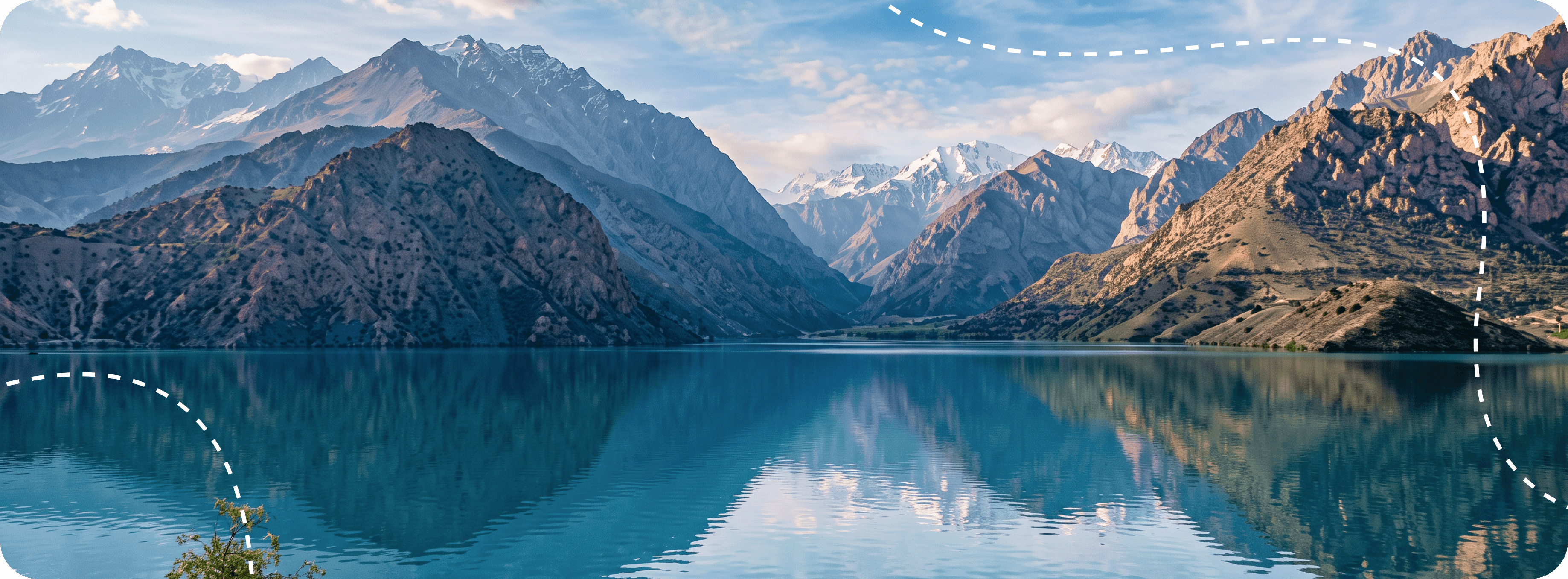
A continuation of Anara Zhumash’s column from the Centrum Air in-flight magazine
In the magazine, we wrote that water once decided where a road would run. Today it decides where to go. Here is the continuation of that story: the same lakes and rivers, with the details that didn’t fit on the page. What to see, when to go, how many hours the road takes, and what to know before you set off.
Central Asia seems like a land of mountains and steppes. But run a finger across the map from the Kyzylkum to the Tien Shan, and you’ll find that almost every major road here leads to water. We chose four countries and thirteen places — different in character, altitude and rhythm.
Choose Your Water
Uzbekistan — water you don’t expect. Aydarkul in the middle of the desert, where you’ll want to spend the night in a yurt. And Charvak with the mountain rivers Ugam and Pskem — for those who come to water for movement.
Kazakhstan — water and altitude. The turquoise Big Almaty Lake, the Kolsai Lakes and the sunken forest of Kaindy. And at the opposite pole — Alakol and Balkhash, with horizons like the sea’s.
Kyrgyzstan — water as the heart of the journey. Issyk-Kul, around which the whole trip is built. And Song-Kul at an altitude of three thousand meters, where schedules lose their meaning.
Tajikistan — water as a reward for the road. Iskanderkul in the Fann Mountains and the Seven Lakes, which change color from one to the next.
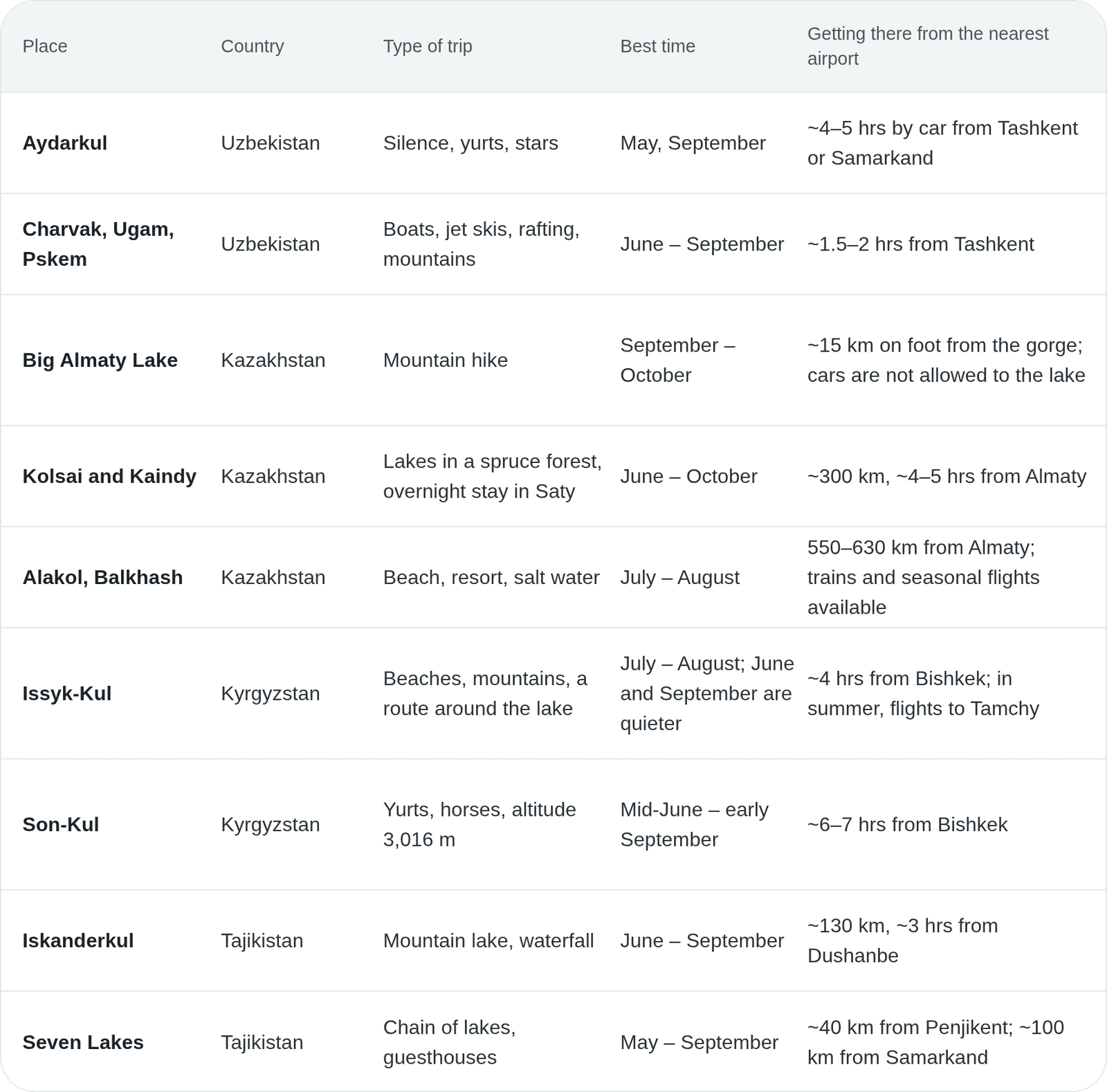
At a Glance: Which Place for Which Mood
Uzbekistan: Water You Don’t Expect
Uzbekistan is usually pictured as a land of deserts and ancient cities. But it has two very different watery faces. One is Aydarkul, a huge lake in the middle of the Kyzylkum, where people go for silence. The other is Charvak and the mountain rivers Ugam and Pskem, an hour and a half from Tashkent, where people go for movement.
Aydarkul: A Sea in the Middle of the Desert
Aydarkul appeared almost by accident. In 1969, after a powerful flood, about 21 km³ of water was released from the Chardara Reservoir into a lowland — and that is how the Arnasay lake system came into being. Today Aydarkul is one of the largest lakes in the country: about 160 km long and almost 35 km wide. It lies on the border of the Jizzakh and Navoi regions.
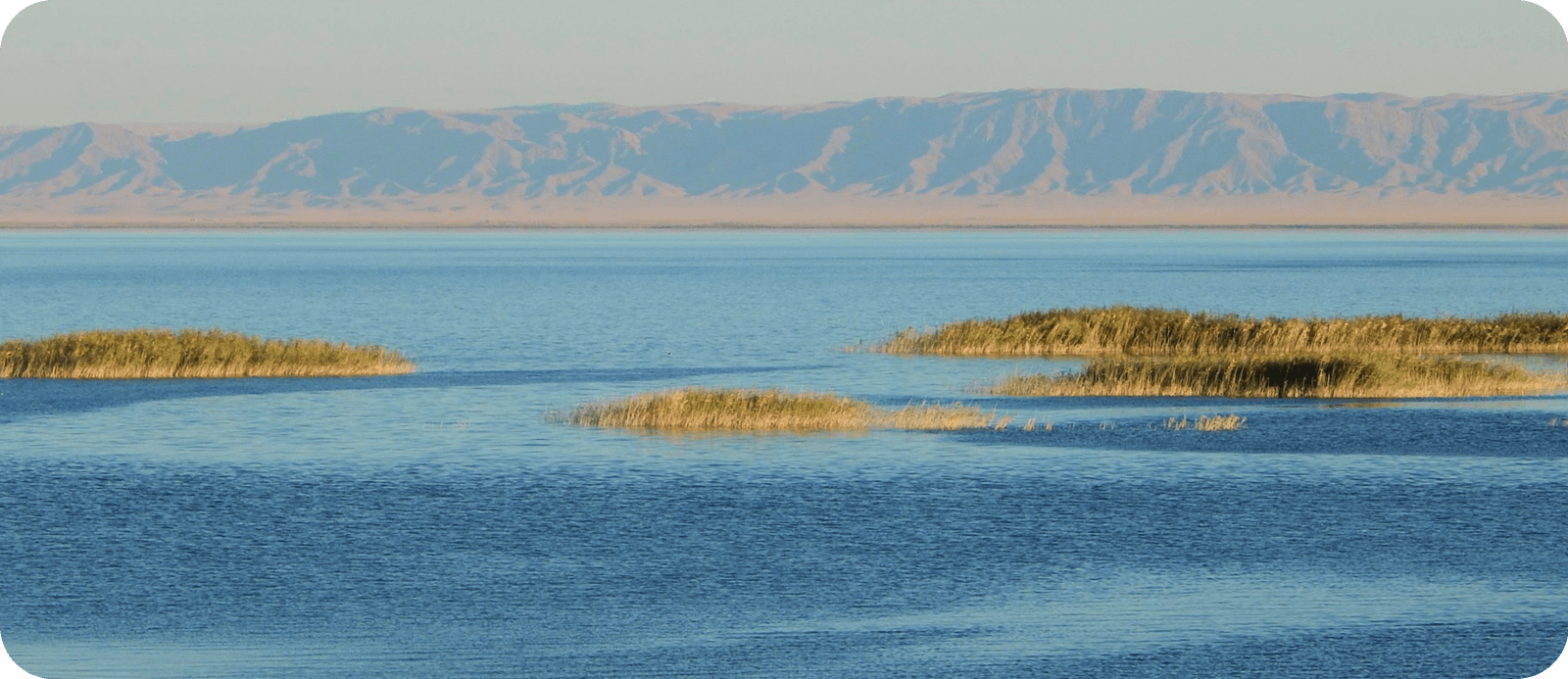
What to do: spend the night in a yurt camp on the shore, ride camels, fish, watch the stars — there is almost no light around. In spring and autumn, migratory birds stop at the lake.
When to go: the yurt camps operate from April to October. The most comfortable time is May and September. From late May to early September you can swim, but it can get very hot during the day.
How to get there: by car from Tashkent, Samarkand or Bukhara, usually with a stop in Nurata. By train to Jizzakh on the Tashkent–Samarkand line, then onward by car.
On the way: Nurata, with the Chashma spring and the remains of a fortress linked to the name of Alexander the Great. Yet another story of how water decided where a city would grow.
Charvak: A Mountain Reservoir Near Tashkent
Charvak is a reservoir in the Bostanlyk district, about 80 km from Tashkent. People come here for weekends: the shore, the Chimgan mountains all around, boats and jet skis.
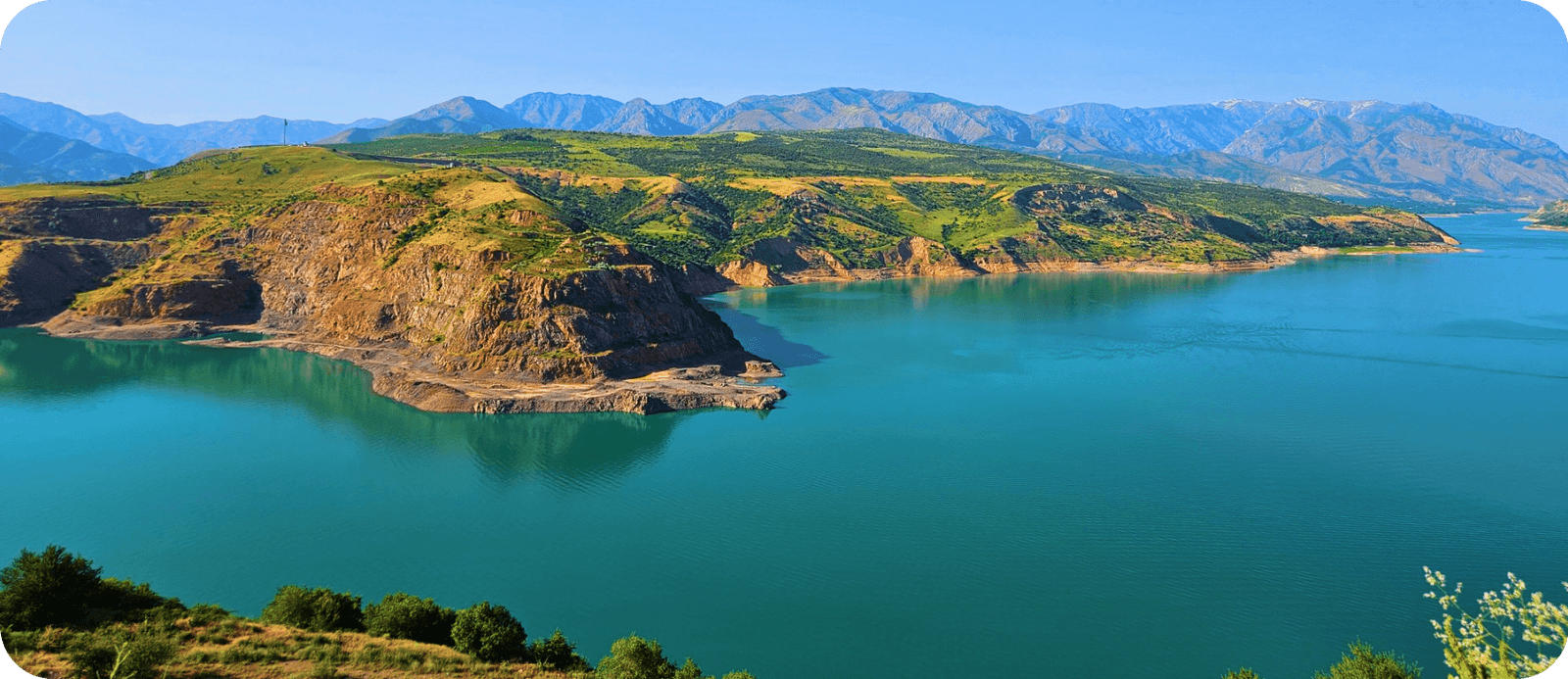
What to do: take a boat or jet-ski ride, go for a swim, spend a day on the beach of the recreation area. Chimgan and the Amirsoy resort are nearby, so the trip is easy to combine with a trip up into the mountains.
When to go: the swimming season runs from June to September. In spring and autumn it’s a good place to walk and look at the mountains without the summer crowds.
How to get there: ~1.5–2 hours by car or taxi from Tashkent
Ugam and Pskem: Rivers for Rafting
Ugam and Pskem are mountain rivers within the Ugam-Chatkal National Park. Both flow into Charvak. The Pskem Valley lies between the Ugam and Pskem ranges, and the nearest villages are about 130 km from Tashkent. The valley was opened to foreign tourists in 2018.
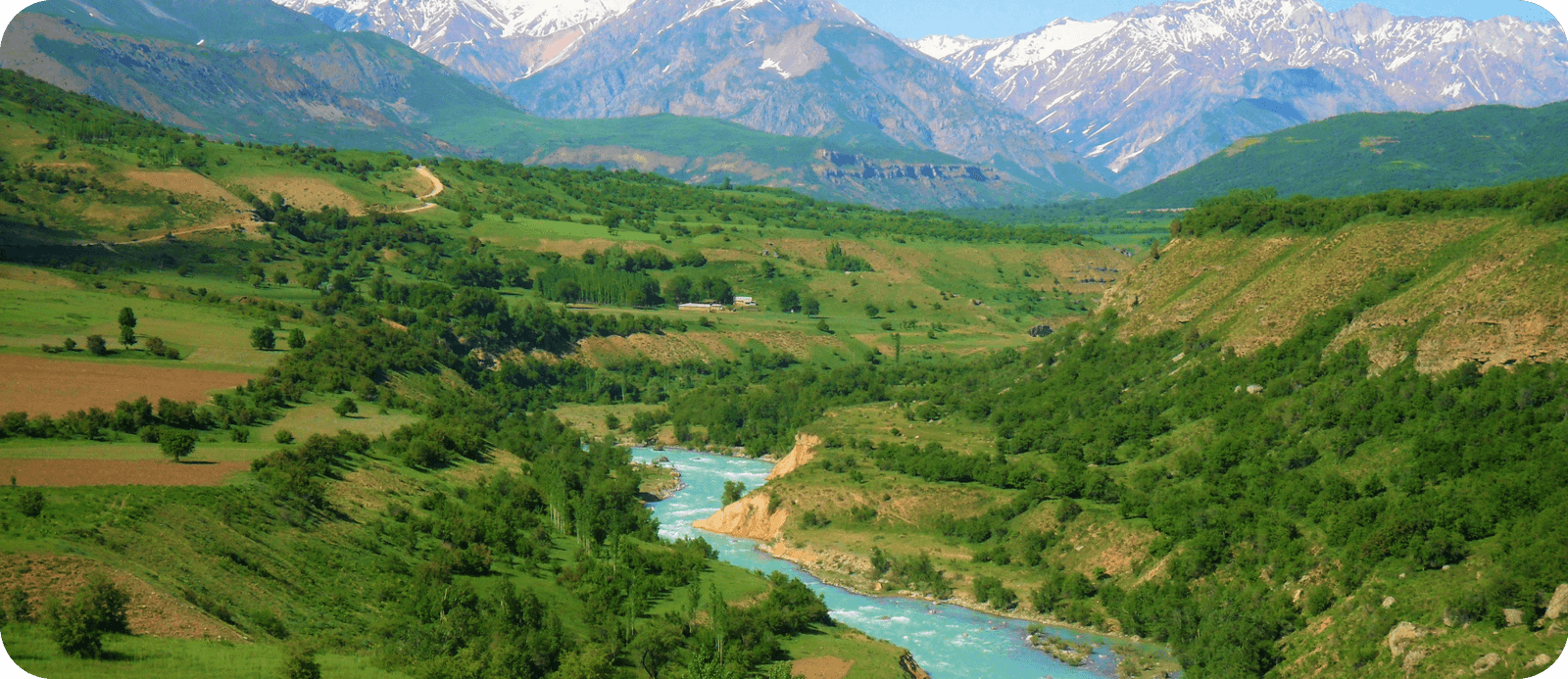
What to do: rafting with an instructor, trekking, overnight stays in guesthouses. In autumn the valley is especially beautiful: golden slopes, the walnut and rosehip harvest.
When to go: for rafting — spring and early summer, when the rivers are full. For walks — autumn.
How to get there: via Charvak and the Bostanlyk district. Rafting is run only with licensed operators.
Good to know: the valley is near the border, so entry rules may change. Check them with your operator before the trip.
How to Link It Into a Route
- A weekend by the water (2 days): Tashkent → Charvak → Pskem Valley → Tashkent.
- Desert and silence (2 days): Tashkent or Samarkand → Nurata → a night in a yurt at Aydarkul → back.
- Everything at once (4–5 days): Tashkent → Charvak → Samarkand → Aydarkul. From Samarkand you can continue to the Seven Lakes in Tajikistan.
Flights
All Uzbek routes start from Tashkent — Centrum Air flies here from dozens of cities. If you’re arriving from abroad, Tashkent will be the first stop of your journey. Find tickets on ioka.uz
Kazakhstan: Water and Altitude
In Kazakhstan, water lives in two rhythms. The mountain lakes around Almaty — Big Almaty Lake, Kolsai and Kaindy — are about altitude, cool air and a road you have to walk. Alakol and Balkhash are about a horizon without an edge and an unhurried resort day. Choose your rhythm — or better yet, try both.
Big Almaty Lake: Turquoise at 2,510 Meters
The lake lies in the Ile-Alatau National Park, above Almaty. Its color shifts from milky blue to a deep turquoise, depending on the season and the light. The lake is a source of drinking water for the city, so strict rules apply here.
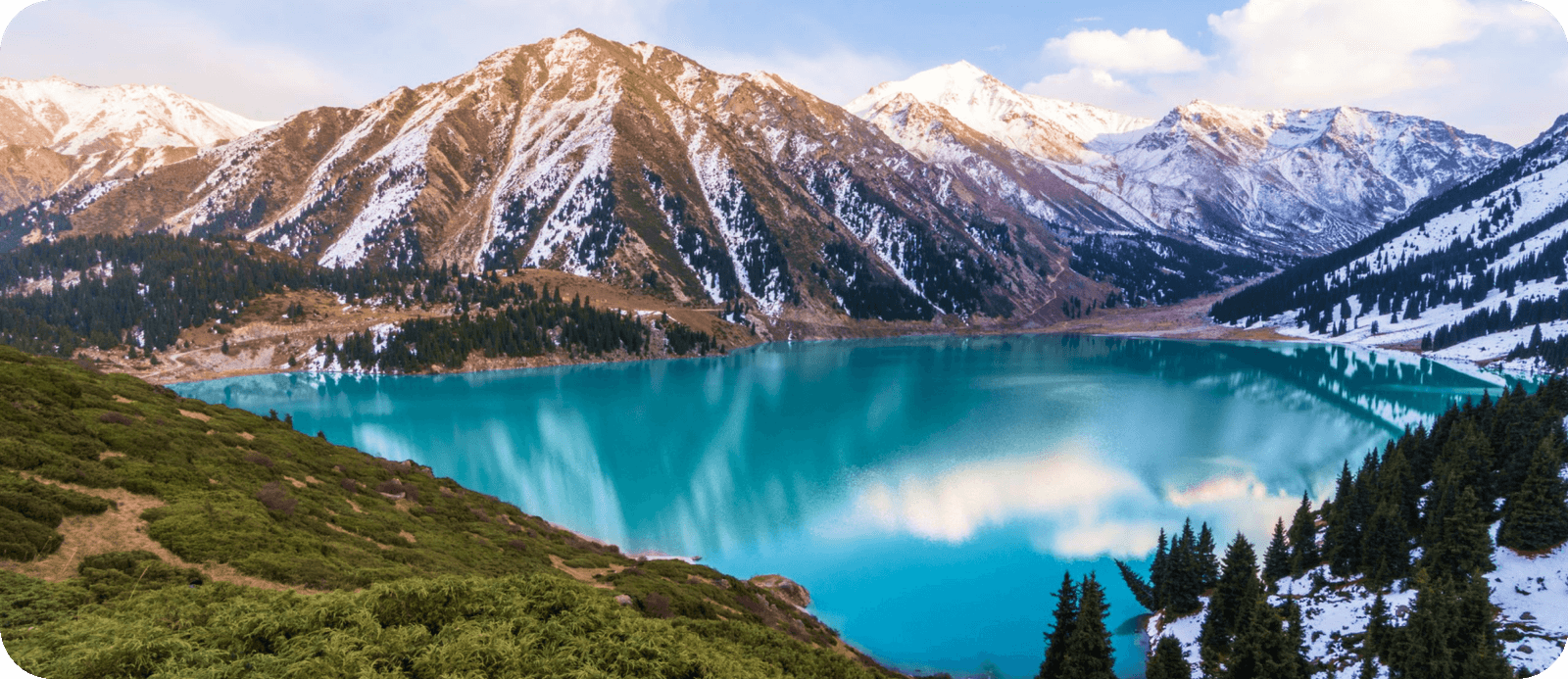
How to get there: private cars have been banned since 2020, and from spring 2026 motorcycles and electric scooters are banned too. The lake is reached on foot: about 15 km uphill with an elevation gain of more than a kilometer, 4–6 hours up. Bus No. 28 and taxis only take you as far as the gorge. The most convenient option is a full-day guided tour. There is no shuttle yet, but the park is discussing launching electric buses.
When to go: September – October for fewer people and golden slopes. July – August for the brightest water, though afternoon thunderstorms are common. From November to April the lake is under ice, and there is an avalanche risk.
Good to know: swimming and fishing are prohibited, and going down to the water without permission is not allowed. Park entry is paid, and you need an ID document.
Kolsai and Kaindy: Lakes in a Spruce Forest
The Kolsai Lakes are a chain of three lakes in the Kolsai Lakes National Park (Kölsay Kölderi), about 300 km from Almaty, almost at the border with Kyrgyzstan. They were formed by a landslide after an ancient earthquake. 11 km from the village of Saty lies Lake Kaindy with its sunken forest: spruce trunks rise out of the turquoise water.
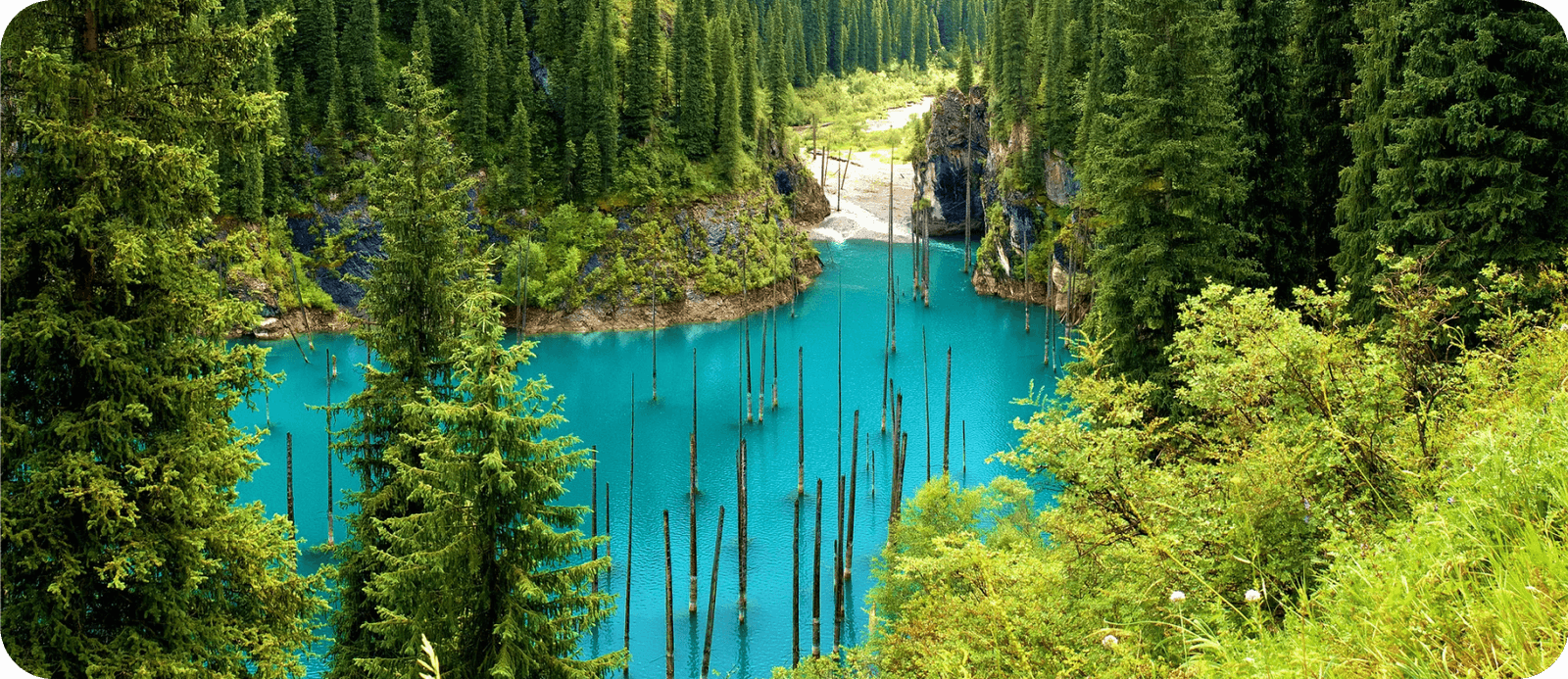
What to do: walk along the first lake, hike up to the second, stay the night in a guesthouse in Saty. In summer — horseback rides.
When to go: June – September is the peak season. September – October brings fewer people and a yellow forest. In winter the lakes freeze, but the road is harder.
How to get there: ~4–5 hours by car from Almaty via Shelek, Kegen and Saty. You need an SUV to reach Kaindy. One-day tours often combine Kaindy with the Charyn Canyon, but that leaves little time at the lakes — it’s better to take a two-day route.
Good to know: the park charges an eco-fee and a fee for entering by car. Rates change, so check on the park’s website.
Alakol: A Salt Lake with a Healing Reputation
Alakol is a large salt lake in the east of the country. Its water and mud are valued for their therapeutic properties. The resorts stand on two shores: the southern one — Akshi and Koktuma — is closer to Almaty; the eastern one — Kabanbay, now Zharbulak — is farther away and simpler, but the water there is more mineral-rich.
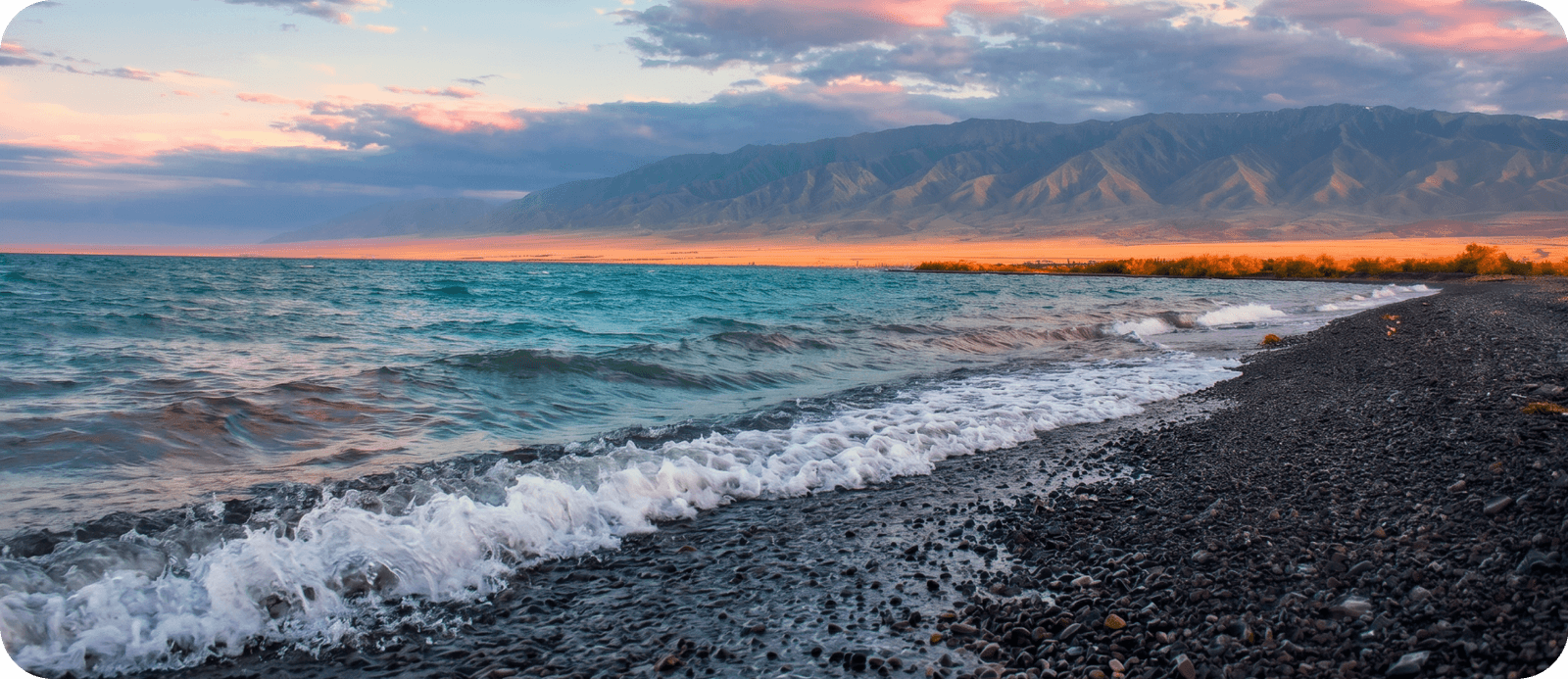
When to go: the season runs from mid-June to the end of August. After August 20, packages get cheaper, but it can be windy and the water cools down.
How to get there: ~630 km from Almaty by car. In summer there is a seasonal train to Dostyk station, and buses. During the season there are sometimes flights to Usharal — the schedule is published closer to summer.
Balkhash: A Lake with Two Waters
Balkhash is one of the most unusual lakes in the world. The western part, where the Ili River flows in, is almost fresh. The eastern part is salty. Between them lies the narrow Uzynaral Strait.
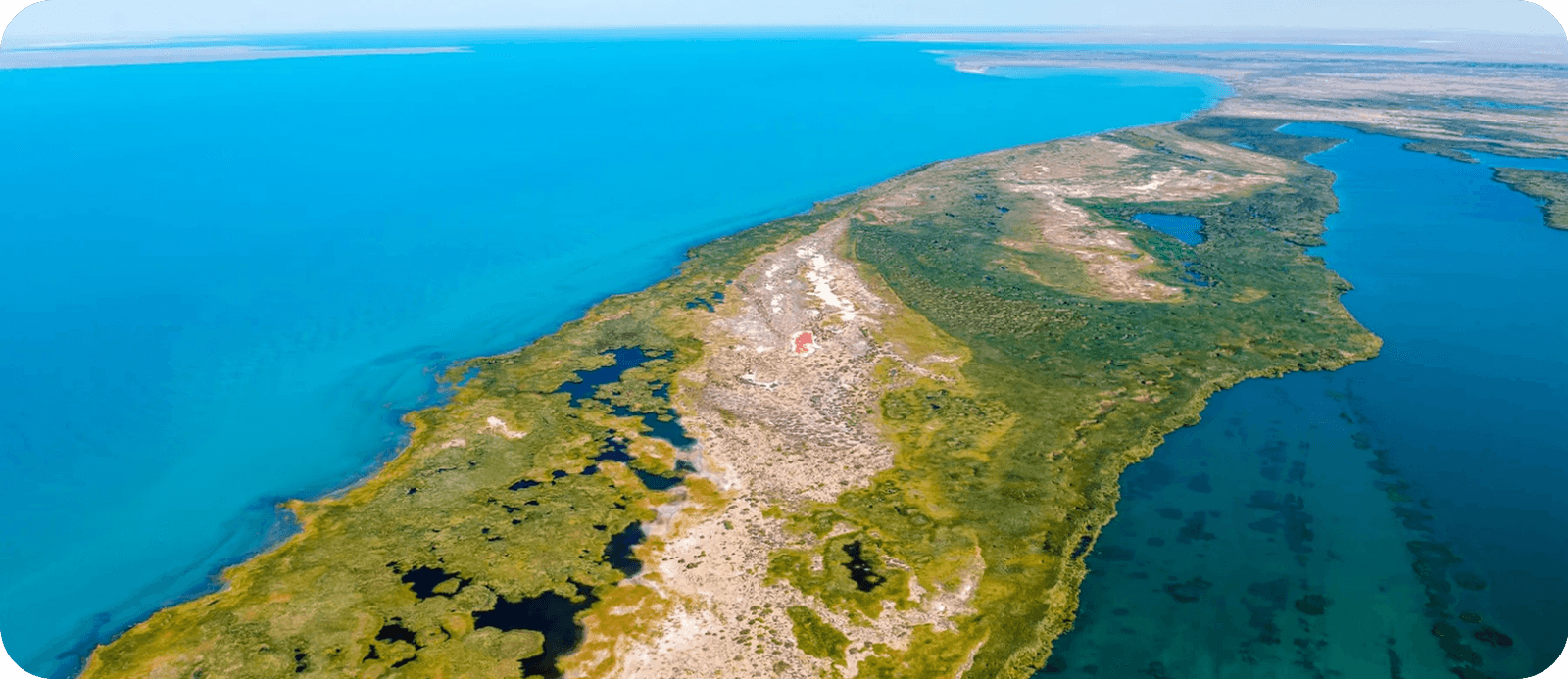
Where to relax: the best sandy beaches are on the northern shore, in Chubar-Tyube and Torangalyk, 25–30 km from the city of Balkhash. On the eastern shore, in Lepsy, there is white sand and shallow water that feels like the sea. The southern shore and the Ili delta are for fishing and for those looking for wild nature.
When to go: swimming starts in late May. The peak is July – August, with water at +24…+27 °C. June and September are quieter and cheaper. Strong winds are common during the day — swim in the morning.
How to get there: ~550 km from Almaty to the city of Balkhash: about 6 hours by car, an overnight train, a bus or a short flight.
How to Link It Into a Route
- Mountains near Almaty (3–4 days): Almaty → Big Almaty Lake → Charyn → a night in Saty → Kolsai and Kaindy → Almaty.
- A resort summer (5–7 days): Almaty → Alakol or Balkhash. Allow a full day for the road, or take the overnight train.
Flights
Kazakhstan routes are best started from Almaty. Centrum Air connects Tashkent with Almaty and Astana. There are no Centrum Air flights to Alakol or Balkhash — from Almaty, people go by train, bus or car. Find tickets on ioka.uz
Kyrgyzstan: Water as the Heart of the Journey
In Kyrgyzstan, two lakes set two opposite ways of traveling. Issyk-Kul becomes the center of the trip: days, stops and plans are built around it. Song-Kul asks for the opposite — to give up the schedule and simply be where the altitude, the yurts and the silence are.
Issyk-Kul: The Lake That Never Freezes
Issyk-Kul lies at an altitude of about 1,600 meters between the ranges of the Tien Shan. It is almost 180 km long, slightly salty, and does not freeze even in winter — hence its name, “warm lake.” It has two shores with different characters.
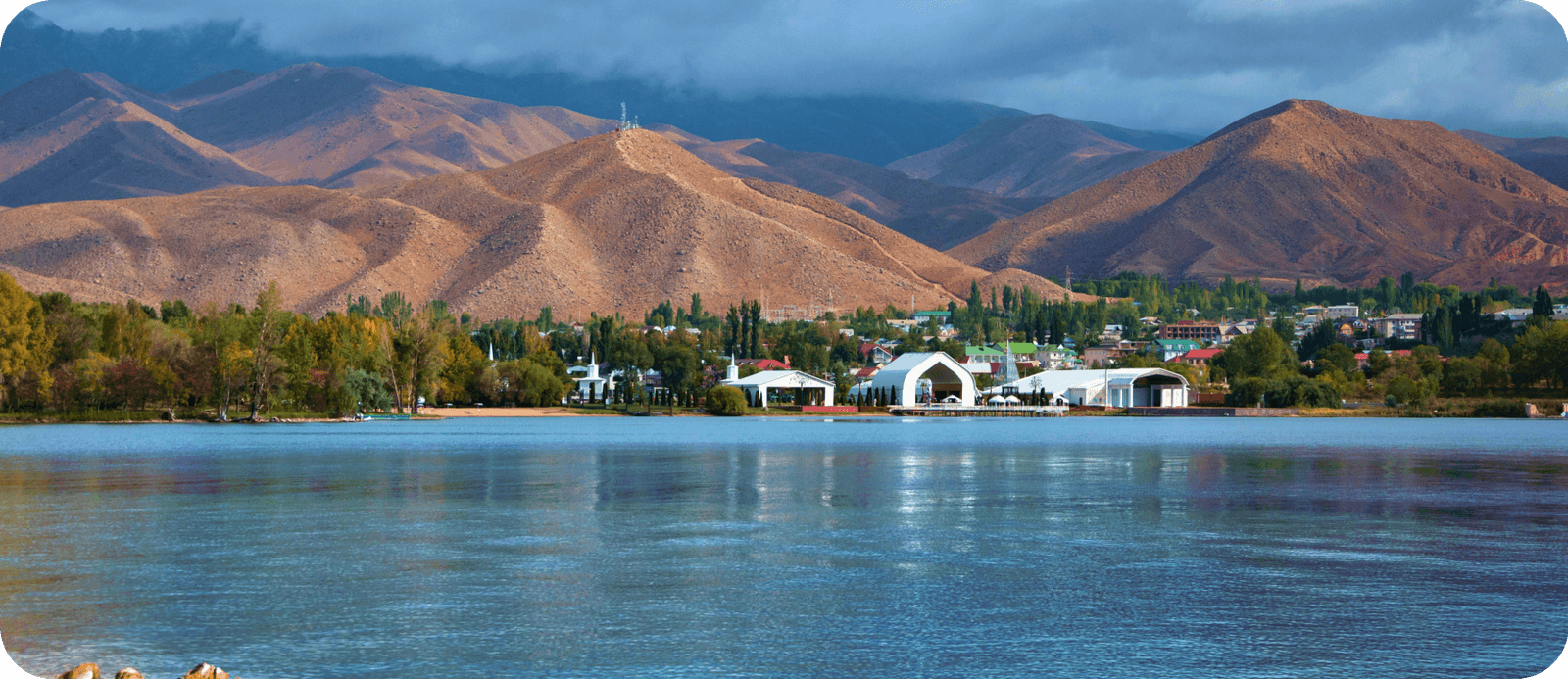
The northern shore is the resort side: Cholpon-Ata, Bosteri, guesthouses and beaches, a Ferris wheel, evening life. It’s convenient if you want a holiday with infrastructure. The southern shore is wild and quiet: the Skazka (“Fairy Tale”) Canyon of red clay, the Jeti-Oguz gorge, yurt camps by the water. In the east is the town of Karakol, the starting point for the mountains.
What to do: swim and sunbathe, drive around the lake in 3–5 days, head up to the hot springs and gorges of the southern shore, try ashlyan-fu in Karakol.
When to go: the swimming season is July and August, when the water warms to about +20 °C. June and September are quieter and cheaper, and good for trips around the lake. In winter Issyk-Kul doesn’t freeze, and ski bases operate nearby.
How to get there: from Bishkek to Cholpon-Ata is about 250 km, ~4 hours by car or minibus. In summer, seasonal flights from Almaty and Astana go to Issyk-Kul airport in Tamchy.
Song-Kul: A Lake at Three Thousand Meters
Song-Kul is the second-largest lake in Kyrgyzstan: about 28 km long, at an altitude of 3,016 meters. All around are summer pastures, jailoo, where shepherds bring their herds for the whole warm season. There are no buildings here: only yurts, horses and sky.
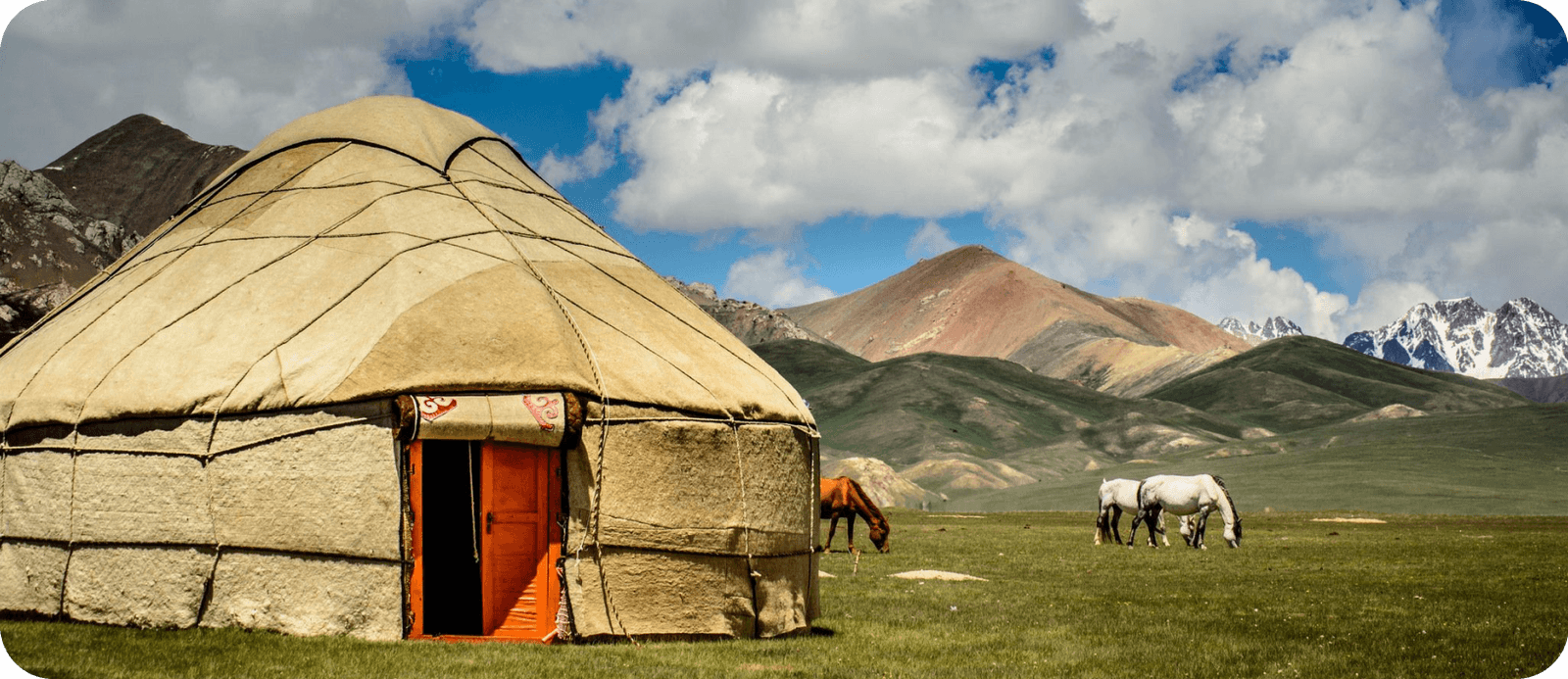
What to do: live in a yurt with a shepherd family, ride horses, watch the stars, drink kumis. Here the water becomes part of a vast space rather than a separate sight.
When to go: the yurt camps operate from about mid-June to early September. Even in summer, daytime temperatures can be around +15 °C, and nights drop to freezing. Bring warm clothes. For most of the year the lake is under ice and the road is impassable.
How to get there: 6–7 hours by car from Bishkek, usually via Kochkor and mountain passes. Part of the road is unpaved. Many people come as part of a 2–3-day horseback tour.
Good to know: part of the lake belongs to a nature reserve. Take your trash with you and don’t drive off the track onto the pastures — the grass here takes years to recover.
How to Link It Into a Route
- Around Issyk-Kul (5–6 days): Bishkek → Cholpon-Ata → Karakol → the southern shore: Jeti-Oguz and the Skazka Canyon → Bishkek.
- Altitude and silence (7–8 days): Bishkek → Kochkor → two nights at Song-Kul → the southern shore of Issyk-Kul → Karakol → Bishkek.
Flights
Kyrgyz routes begin in Bishkek — Centrum Air flies here from Tashkent. The flight takes about an hour and a half, and by evening you can already be on the shore of Issyk-Kul. Find tickets on ioka.uz
Tajikistan: Water as a Reward for the Road
No one comes to the lakes of Tajikistan by accident. The road to them runs through passes and gorges, and at every turn the water and the rocks change color — with altitude, weather and light. That’s why the road here is not a pause between destinations but part of the journey. Iskanderkul and the Seven Lakes are places for unhurried contemplation.
Iskanderkul: Alexander’s Lake
Iskanderkul lies in the Fann Mountains at an altitude of about 2,200 meters. A local legend links it to Alexander the Great: supposedly he stopped here during his campaign, and his horse Bucephalus still appears on the shore on moonlit nights. True or not, the water here really does change before your eyes — from turquoise to deep blue.
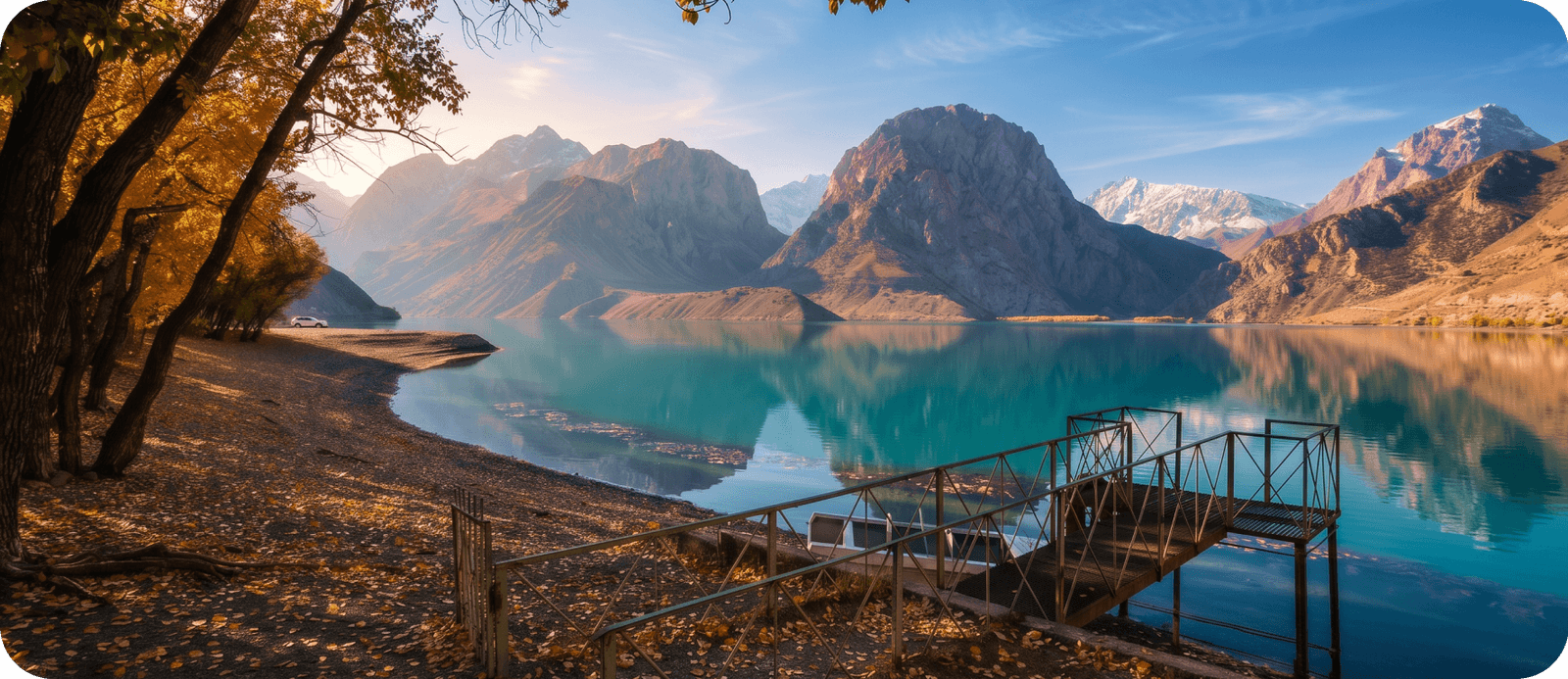
What to do: walk the short trail to the 40-meter waterfall known as the Fann Niagara, visit the neighboring Snake Lake, stay the night at a tourist base or in a tent. For the experienced — trekking in the Fann Mountains.
When to go: June – September. Spring and autumn are beautiful too, but nights are cold, and snow can close the pass.
How to get there: about 130 km from Dushanbe, ~3 hours by car along the M34 highway via the Anzob Pass, which offers the best view of the Fann Mountains.
Seven Lakes: A Chain of Color
The Seven Lakes, or Marguzor Lakes, are a cascade in the gorge of the Shing River, about 40 km from Penjikent. They climb from 1,640 to 2,400 meters over roughly 14 km. Each has its own name and its own color: Nezhigon, Soya, Gushor, Nofin, Khurdak, Marguzor and Hazorchashma — “a thousand springs.”
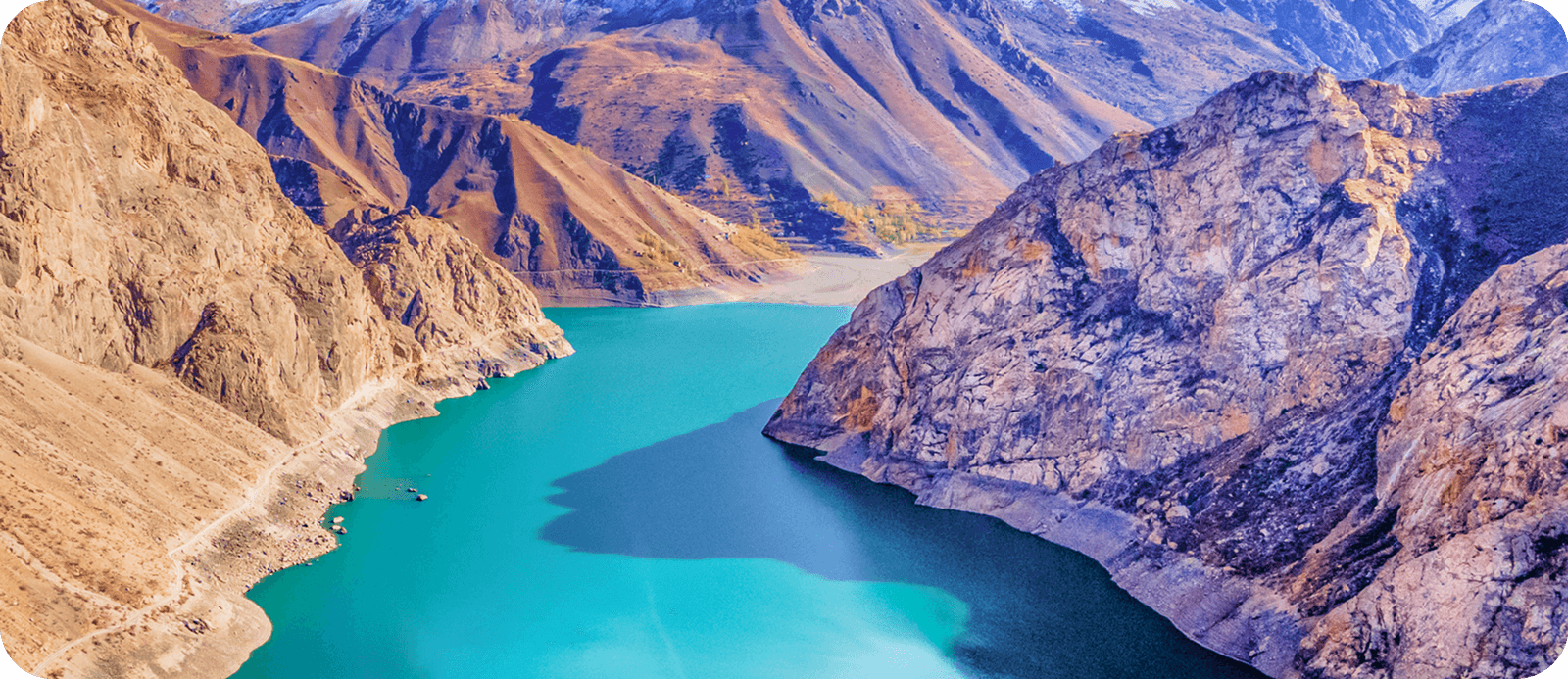
What to do: drive or walk along the whole chain — short stops take about 3 hours, an unhurried visit 5–6. Stay in a guesthouse in the village near Khurdak or Marguzor and see how local families live. Near Marguzor there are ancient petroglyphs. In summer, a trail to the Tavasang Pass starts from the last lakes.
When to go: May – September. Guesthouses and campsites operate only in the warm season.
How to get there: most conveniently from Penjikent. From there it’s about 100 km to Samarkand and about 260 km to Dushanbe, ~5 hours. The asphalt ends at the lakes, and beyond that is a dirt road with steep climbs. In summer, the sections near Nofin and Marguzor may be flooded.
Good to know: for travelers from Uzbekistan, the Seven Lakes are the nearest water in Tajikistan: day trips run from Samarkand across the border at Penjikent. Before you go, check the border crossing’s operating hours and the visa rules for your citizenship.
How to Link It Into a Route
- From Samarkand (1–2 days): Samarkand → border → Penjikent → Seven Lakes → a night in a guesthouse → Samarkand.
- The Fann Mountains (4–5 days): Dushanbe → Anzob → Iskanderkul → Penjikent → Seven Lakes → Samarkand or back to Dushanbe.
Flights
Centrum Air flies to Dushanbe from Tashkent and Samarkand. For Iskanderkul, it’s more convenient to fly into Dushanbe. For the Seven Lakes, start your journey in Samarkand. Find tickets on ioka.uz
Getting There: Flying with Centrum Air
It’s easiest to start a journey to the water with a flight. Centrum Air connects Tashkent with the cities from which the region’s lakes are convenient to reach: Bishkek for Issyk-Kul and Song-Kul, Dushanbe for Iskanderkul, Almaty and Astana for the Kazakh lakes. Uzbek routes start right from Tashkent, and for the Seven Lakes it’s easier to travel via Samarkand.
There are no direct flights to the lakes themselves: from the airport to the water it’s anywhere from an hour and a half to seven hours by road. That’s part of the journey, and in each section above we’ve described how to make it comfortable.
Find tickets on ioka.uz · Centrum Air flights
How to See More
People go to the water to slow down. Choose one place and give it time: spend a night by the shore, try the local food, talk to the people for whom this shore is home. And take care of it: take your trash with you, don’t light fires where it’s not allowed, and respect the rules of protected areas. Many of these lakes are a source of drinking water or part of national parks.
Anara Zhumash, co-founder of ioka travel
Contact details
Phone: +998 78 113 6172; +998 91 778 6040.
Email: sales@ioka.uz
Telegram: @iokauz_customer_service